

Extra dust on furniture, musty odors, or irritation that seems worse while the HVAC runs may point to an airflow, filtration, moisture, or duct issue. In coastal Huntington Beach, marine humidity can combine with ordinary household dust and leave residue around registers and accessible duct surfaces.
While duct cleaning is not an automatic cure-all, recognizing the signs your air ducts need cleaning (coastal dust & salt) solves real airflow and contamination issues. Here are seven observable signs, what they mean, when cleaning is not the right fix, and the quickest visual clues around your registers.
1. Black Dust or Dark Rings Around Supply Vents
Wiping down your ceiling registers only to see dark, sooty rings return within days is a common frustration. While many homeowners immediately fear mold, dark residue around supply vents typically stems from a few distinct sources:
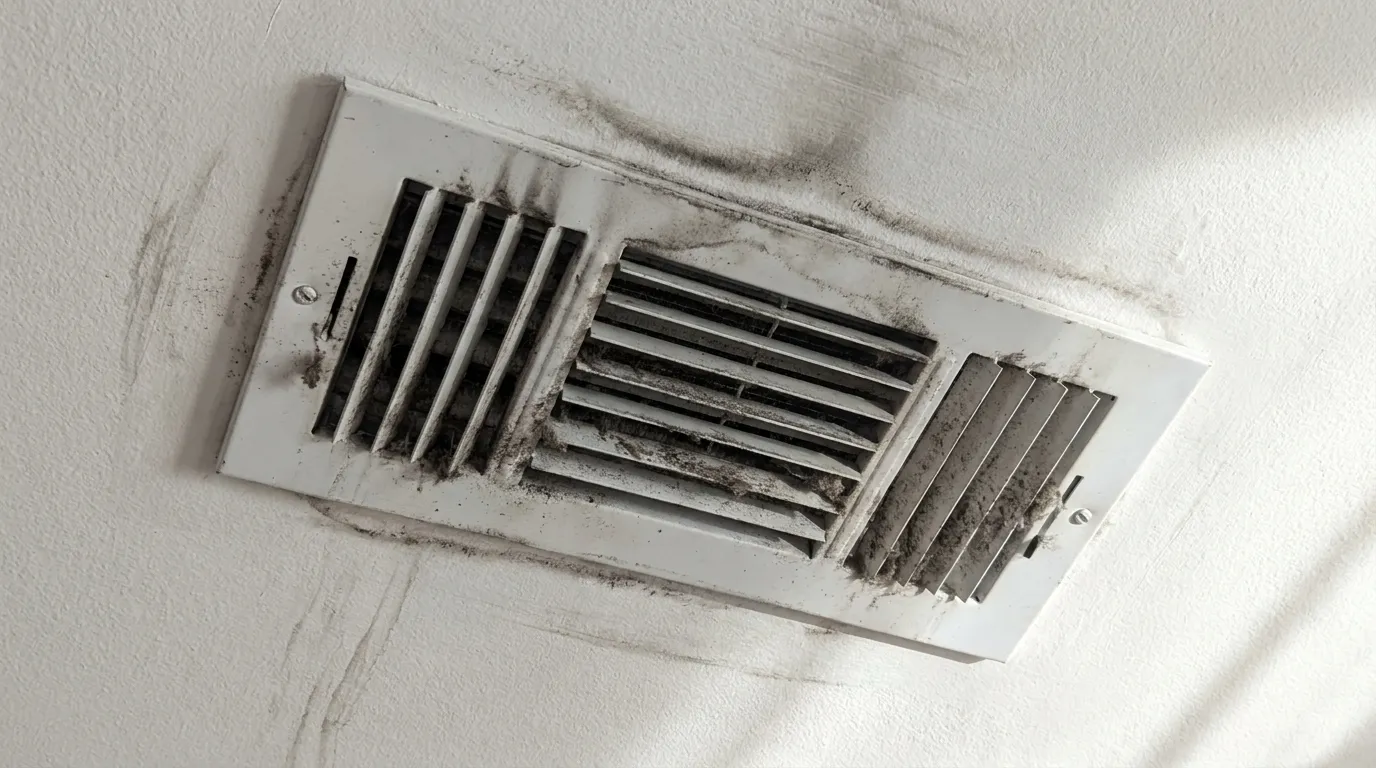
- Thermal tracking: Temperature differences cause airborne household dust to plate onto drywall where air currents hit the ceiling.
- Combustion soot: Burning candles, using fireplaces, or gas appliances produce fine soot that settles near airflow openings.
- Duct leakage: Unsealed return or supply ducts draw dusty attic air and insulation particles straight into your living space.
- Moisture-related growth: Condensation on uninsulated boots or grilles can encourage localized microbial growth.
In coastal Orange County, salt air and marine humidity make this buildup much stickier. Moist coastal air can make fine soot and dust cling more readily to louvers and nearby textured drywall.
What to do next: Clean the register, take a reference photo, and monitor how fast your air filter loads. If the residue is oily or you suspect a furnace combustion problem, schedule an HVAC safety inspection immediately. If you suspect attic dust or air leaks, schedule duct leakage testing before paying for repeat cleanings. If an inspection confirms heavy debris inside the system, professional duct and vent cleaning can remove that buildup as part of a broader airflow plan.
2. Musty or Damp Odors Right When Cooling Starts
Turning on your air conditioning should bring crisp relief, not a blast of damp, “stale beach house” air. A musty smell at the start of a cooling cycle usually indicates that trapped moisture has combined with organic debris inside your system.
Common sources of this odor include:
- Dirty evaporator coil or drain pan: Dust on damp coil fins can contribute to sour odors and conditions that support microbial growth.
- Standing condensate in the drain pan: A blocked drain line leaves stagnant water sitting right next to your circulating air stream.
- Contaminated duct lining or return plenum: Dust and organic debris trapped in duct material absorb humidity, holding and circulating musty smells.
Along the coast, dense morning marine layer humidity increases condensation throughout the indoor unit. If airflow is sluggish or components are coated in dust, moisture cannot drain or evaporate properly.
What to do next: Avoid temporary chemical fogging sprays and do not assume duct cleaning alone solves the issue. If the moisture source remains unaddressed, the smell will quickly return. Instead, request a full inspection of the blower compartment, drain pan, and indoor coils. A targeted evaporator coil cleaning often resolves the true culprit. For persistent odors across multiple rooms, professional IAQ testing can help narrow down possible contaminants so you can choose a more targeted response.
3. Visible Growth or Dark Spotting on Vent Covers and Duct Liners
Spotting dark flecks on a return grille, seeing discoloration in the return cavity, or noticing a persistent musty odor indicates excess moisture in your system. When household dust settles on damp surfaces, microbial growth can take hold inside the ductwork.
How you address the issue depends on the duct material:
- Porous duct materials: Internal fiberglass duct liners, duct board, and flexible ducting are porous and absorb moisture. EPA guidance says wet or mold-contaminated insulated duct material generally cannot be cleaned effectively and should be removed and replaced after the moisture source is corrected.
- Bare sheet metal: Rigid, non-porous sheet metal trunk lines can be thoroughly washed, cleaned, and sanitized once the underlying moisture source is corrected.
In coastal communities, salt air raises the priority. Salt residue can attract moisture from humid air. In some coastal systems, that may help accessible surfaces stay damp longer, so the moisture source and affected material should be evaluated before cleaning.
What to do next: Always ask your HVAC provider to show you the contamination in place rather than relying solely on smartphone photos. Before cleaning or replacing sections, correct the primary moisture driver, such as a clogged condensate drain, a dirty evaporator coil, or restricted airflow. Addressing these root causes improves system hygiene and prevents regrowth. For complete protection, consider pairing duct service with the fixes in our guide to indoor air quality in Huntington Beach.
4. Debris or Visible Dust Puffs Blowing From Supply Vents
EPA guidance identifies substantial visible debris and particles released from supply registers as conditions that may support considering duct cleaning. If you see a dust cloud when the system starts, or notice grit collecting beneath vents, your system has crossed that threshold.
This fallout typically points to:
- Supply trunk accumulation: Debris builds up in the plenum or trunk lines until high airflow dislodges it.
- Post-remodel dust: Drywall sanding or flooring work can pull dense debris into unsealed return ducts.
- Return-side duct leaks: Loose joints or cracks draw in dusty attic air and insulation fibers.
In coastal homes, fine outdoor grit may mix with household dust and settle in vent boots or low spots. If particles are visibly leaving the registers, an inspection can identify whether the source is duct debris, leakage, filtration, or another system issue.
What to do next: Remove a grille and inspect the first 6 to 12 inches of duct with a flashlight. If debris is heavy or actively blowing out, schedule a full-system duct and vent cleaning. Ask what components are included in the proposed scope rather than accepting a register-only service. To keep dust down between professional cleanings, consider dedicated air filtration upgrades to capture fine airborne particles early.
5. Weak Airflow or Uneven Room Temperatures
When one room never cools, airflow from the registers feels weak, or your system runs longer than it used to, it is natural to assume clogged ductwork is choking off the air.
While heavy dust accumulation can restrict air movement, airflow issues across Orange County homes often stem from structural or mechanical problems:
- Duct damage and restrictions: Kinked flexible ducting, crushed runs in tight attics, or disconnected joints blowing conditioned air into unconditioned spaces.
- Air leakage: Unsealed joints and tears drop air pressure throughout the system, leaving distant rooms starved for airflow.
- Component buildup: A clogged blower wheel or dirty evaporator coil chokes airflow before air ever travels through the supply ducts.
Near the coast, airborne salt and fine dust load filters much faster than in inland areas. A single dirty filter can choke air volume and mimic serious duct problems.
Start by checking your filter’s fit and replacing it if it is dirty. If airflow remains weak, set realistic expectations. Duct cleaning removes interior debris, but it is not a guaranteed fix for comfort imbalances caused by pressure loss or crushed lines.
What to do next: If the issue persists, start with diagnostic testing rather than guesswork. Schedule duct leakage testing to pinpoint hidden tears and pressure drops. If inspection confirms buildup at the indoor coil, professional evaporator coil cleaning may improve airflow, although duct damage, sizing, and pressure issues can still require separate repairs.
6. Increased Allergy Symptoms or Irritation When the System Runs
Do you notice more sneezing, itchy eyes, or throat irritation when your system runs or when you spend time at home? It is easy to assume dirty ducts are the primary cause, but indoor air quality involves several connected factors.
Duct debris can contribute to irritation, but everyday sources inside the home often drive symptoms as well. Pet dander, outdoor pollen, cooking particles, and moisture-related growth all circulate through living spaces. Duct cleaning is most defensible when an inspection shows visible contamination, pest activity, or debris actively blowing from supply registers.
Along the coast, marine humidity adds another challenge. Damp coastal air can contribute to condensation and moist dust where duct insulation, sealing, or airflow is inadequate. Visible growth or persistent moisture calls for source correction and professional evaluation.
If you are dealing with persistent irritation, focus on condition-based steps rather than treating duct cleaning as a standalone cure-all:
- Upgrade and maintain your air filtration with properly fitted, high-efficiency filters to capture airborne irritants before they spread.
- Consider targeted IAQ testing if symptoms are unexplained, which may help identify or rule out specific contaminants.
- Treat duct cleaning as one helpful part of a broader air quality plan when physical debris or growth is confirmed.
7. Persistent Fine Dust After Home Renovations or Heavy Wind
You finish a remodel, wipe down every surface, and clean the floors, but a layer of powdery dust settles right back onto your furniture hours later.
When you notice dust that feels finer than normal after drywall sanding, flooring replacement, or a week of heavy coastal winds, your ductwork is often holding that debris. Construction dust and outdoor grit get pulled directly into unsealed return vents. Once inside, particles settle across returns, plenums, and supply lines, recirculating every time the blower turns on.
In coastal Orange County homes, morning marine humidity makes the issue worse. Moisture in the air causes fine dust to clump and stick to duct walls and register boots, making it impossible to clear away with a household vacuum at the grille.
What to do next:
- Replace air filters immediately: Swap out dirty filters right away to prevent restricted airflow and strain on your equipment.
- Schedule a post-project cleaning: If the HVAC ran during construction or vents were unsealed, book professional duct and vent cleaning to clear the system.
- Wait until work is fully finished: Always complete all dusty projects before scheduling service. Cleaning too early allows fresh debris to redeposit, making it feel like the cleaning failed.
If persistent dust keeps settling across your home, contact Brightwater Heating & Air to schedule an inspection.
How to Decide on Air Duct Cleaning: A Coastal Homeowner’s Action Plan
Air duct cleaning should always be a condition-based decision rather than a routine recurring expense. In coastal Orange County, ocean humidity and fine salt aerosol mix with indoor dust. A clear decision framework helps you focus on observable conditions before choosing a service.

Use this step-by-step guide to evaluate your system, spot common contractor scams, and make a confident choice for your home.
Step 1: Confirm Legitimate Triggers Before Calling
According to Environmental Protection Agency (EPA) guidelines, duct cleaning is justified under specific, verified conditions. Check your home against these three criteria:
- Confirmed microbial growth: Visible mold-like buildup verified on sheet metal, fiberglass, or the air handler cabinet.
- Pest or vermin activity: Rodent droppings, nesting materials, or insect remains inside the duct pathways.
- Active debris discharge: Sand, crusty salt particles, or visible dust clouds blowing out of supply grilles.
If your main issue is uneven room temperatures or weak airflow, duct cleaning alone will not solve it. Schedule duct leakage testing to locate unsealed joints, inspect for restricted evaporator coils, or evaluate system filtration before booking a cleaning service.
Step 2: Run a 5-Minute Homeowner Pre-Check
Before you call a professional, inspect three key areas yourself:
- Check filter condition and fit: Pull out your return air filter. Confirm that it fits tightly in the housing without bent edges or gaps that let unfiltered air enter the returns.
- Inspect one supply boot: Unscrew one accessible floor or wall register grille. Shine a flashlight down the boot. Look for heavy debris accumulation, rust flakes, or wet insulation compared to a normal, thin dust film.
- Conduct a startup odor check: Stand near a central supply register right as the system turns on. Note whether musty or earthy odors disperse quickly or linger throughout the cycle.
Step 3: Screen Out Common “Blow-and-Go” Scams
Low-cost specials on neighborhood social media feeds often lead to aggressive upselling. Protect yourself by recognizing these four warning signs:
- Unrealistically low prices: Be cautious with unusually low whole-house offers that do not explain the scope, equipment, or added charges.
- False EPA certification claims: The EPA does not certify, license, or endorse duct cleaning companies.
- Unjustified chemical fogging: Pressure to apply chemical biocides or aerosol sealants without finding and fixing the underlying moisture source.
- Refusal to share visual evidence: Technicians who will not show you live video feeds or clear digital photos of the actual contamination inside your ductwork.
Step 4: Verify Full-System Scope and Proper Containment
When duct cleaning is justified, make sure your contractor provides a complete whole-system scope:
- Complete system coverage: The cleaning must address the supply runs, return ducts, plenum boxes, blower compartment, and accessible cooling coil surfaces.
- Negative air containment: Ask how the contractor will contain loosened debris and keep it from entering occupied rooms during service.
- Visual documentation: Request before-and-after photographs or camera footage of the cleaned trunks and boots.
To protect indoor air quality over the long term, combine duct care with high-efficiency air filtration, complete IAQ testing, and professional duct and vent cleaning.
If you suspect contamination or want a straightforward, condition-based assessment of your ductwork, contact Brightwater Heating & Air to schedule an honest diagnostic inspection.
Frequently Asked Questions
How often should air ducts be cleaned in Huntington Beach?
Air duct cleaning is best treated as a condition-based service rather than a fixed recurring expense. Consider it when inspection confirms substantial buildup, microbial growth, pest activity, or debris blowing from supply vents. In coastal Huntington Beach, marine moisture and salt aerosol can cause dust to accumulate faster near registers. Homeowners should inspect air filters monthly and schedule a professional HVAC tune-up at least once a year.
Does air duct cleaning help with dust?
Duct cleaning helps with dust when debris is actively releasing from supply registers or when heavy dust has settled inside ducts after major home renovations. However, if everyday dust is entering through unsealed attic duct joints, poor door seals, or low-efficiency filters, duct cleaning alone will not solve the problem. To resolve recurring dust at the source, upgrade your air filtration and schedule duct leakage testing to seal air leaks.
What are mold in air ducts symptoms?
The most common signs of mold in air ducts are a persistent musty odor right when the cooling starts, visible dark spotting around register grilles, and dampness inside the return plenum. Coastal humidity can cause condensation on uninsulated boots or dirty evaporator coils, creating conditions for growth. If you notice these symptoms, confirm the contamination with a visual inspection and repair the moisture source first so the problem does not return.
Is air duct cleaning a scam?
Air duct cleaning is a legitimate service, but misleading marketing tactics are common across the industry. Major warning signs of a scam include whole-house cleaning specials advertised for $49 to $99, false claims of EPA certification, and aggressive pressure to pay for chemical fogging treatments. A reputable contractor should explain the full scope, show evidence from your system, describe debris-containment methods, and avoid recommending chemical treatments without addressing the source.
When should I call a professional in Orange County?
You should call a professional HVAC contractor if you see dust puffs blowing from supply registers, notice persistent musty smells during startup, discover signs of pests, or find visible growth on vents. A professional diagnostic inspection will determine whether your system requires targeted duct cleaning, coil maintenance, or duct sealing. If you want an honest assessment of your system, contact Brightwater Heating & Air to schedule a condition-based evaluation.
Request a Condition-Based Duct Inspection
Concerned about visible debris, recurring odors, or dust leaving your vents? Contact Brightwater Heating & Air or call (714) 316-3755 for a straightforward inspection and clear next steps.