
That upstairs bedroom that stays warm after sunset can make an older Huntington Beach home feel impossible to cool. For a beach bungalow, slab-on-grade tract home, or converted garage, the mini split vs. central AC question is often about retrofit realities, not a simple equipment comparison.
The answer depends first on what is already inside the house. Sound, accessible ducts may make whole-home central AC practical, while leaky attic duct runs, missing ductwork, or room-by-room comfort problems can favor ductless mini-splits. Your layout, cooling priorities, and installation access all affect comfort, cost, and disruption.
Brightwater Heating & Air put together this older-home retrofit guide to compare mini-splits and central AC in Huntington Beach by the details that shape a real assessment: ductwork condition, installation disruption, cost range, and coastal upkeep. You will see when each approach makes sense, which questions to ask, and why a home inspection matters before signing anything.
The first step is evaluating the ducts, because their condition frames every decision that follows.
The Short Answer: It Depends on Your Ductwork
In the mini split vs. central AC decision for an older home, the condition of your existing ductwork is usually the deciding factor. Good ducts in good shape often make central AC the simpler path. No ductwork, or ducts that are badly leaking in a hot attic, typically point toward ductless as the more practical option. Brightwater Heating & Air sees this play out regularly in older Huntington Beach homes, where ductwork condition can be an asset or the source of the comfort problem.
The U.S. Department of Energy notes that typical duct systems lose 20% to 30% of conditioned air through leaks, holes, and poorly connected ducts. In an unconditioned attic where summer temperatures can exceed 130 degrees, cooled air also picks up heat before it reaches the rooms you are trying to cool.
- Attic duct runs: Older flex ducts may be poorly sealed, crushed, underinsulated, or exposed to hot attic temperatures.
- Slab-on-grade homes: Adding new ducts is difficult without a crawlspace below the home or accessible ceiling space above.
- Additions and conversions: Converted garages, upstairs rooms, and additions often were not part of the original duct design.
- One thermostat downstairs: The lower level may reach the setpoint while upstairs bedrooms stay warm well into the evening.
If the ducts are healthy and deliver the right airflow to each room, keeping them avoids the cost and visual impact of multiple indoor mini-split heads. If they are undersized, inaccessible, or badly leaking, ductless zoning may be the more practical way to cool the rooms that need it most.
Why Older Huntington Beach Homes Are a Special Case
Most Huntington Beach tract homes built in the 1960s and 1970s sit on concrete slab foundations without a crawlspace. Duct runs travel through attic space above the ceiling, where summer temperatures can reach 130 degrees or more. Air cooled by the system absorbs heat from the attic before it reaches the bedrooms.
Additions and converted garages often came after the original duct plan was finished. These spaces may have no duct connection, or a connection too small for their cooling load. A single thermostat on the ground floor can reach setpoint while upstairs bedrooms stay warm well into the evening.
Salt air from the coast adds another consideration. The outdoor unit of any AC system faces corrosion from salt film, humidity, and coastal particulates. This affects both mini-splits and central systems equally, making salt air a maintenance factor rather than a reason to choose one system type over the other.
How a Ductless Mini-Split Works
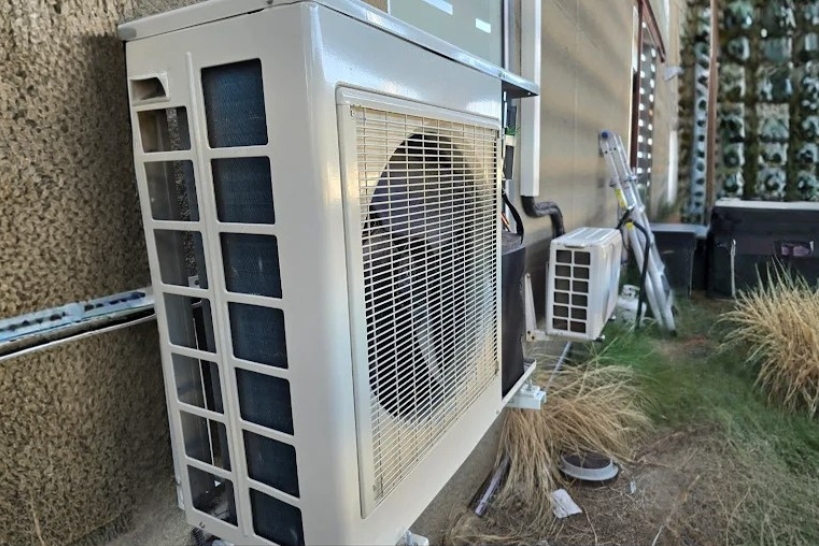
A ductless mini-split has two main components: an outdoor condenser and one or more indoor heads. Refrigerant lines connect them through a small wall opening, usually about three inches in diameter. No ductwork is needed.
Each indoor head serves its own zone. Occupants control the temperature room by room using a remote, wall panel, or phone app. Most mini-split models reverse their cycle to provide heat in cooler months, making them heat pumps for year-round use.
Indoor heads come in several configurations: wall-mounted, ceiling cassette, floor-mounted, and concealed ducted. A concealed ducted head uses a short duct run to deliver air through standard registers, which reduces visible equipment inside the room and can make the system more discreet in spaces where wall heads are not wanted.
How Central Air Works in a Home That Already Has Ducts
A central air conditioning system uses an outdoor condenser, an indoor coil or air handler, and a network of ducts to move conditioned air through the home. The blower pushes cooled air through supply registers and returns warmer air through return grilles back to the air handler.
One thermostat controls the whole system. When cooling is called for, the compressor runs, the indoor coil absorbs heat, and the blower distributes cool air through the ducts. Central systems support larger media filters and whole-home air quality equipment that ties into the existing duct network.
A central replacement is usually the simpler project when ducts are already in good condition and sized correctly. When ducts need repair, resizing, or full replacement, the project scope expands considerably in both cost and construction time.
Side-by-Side Comparison
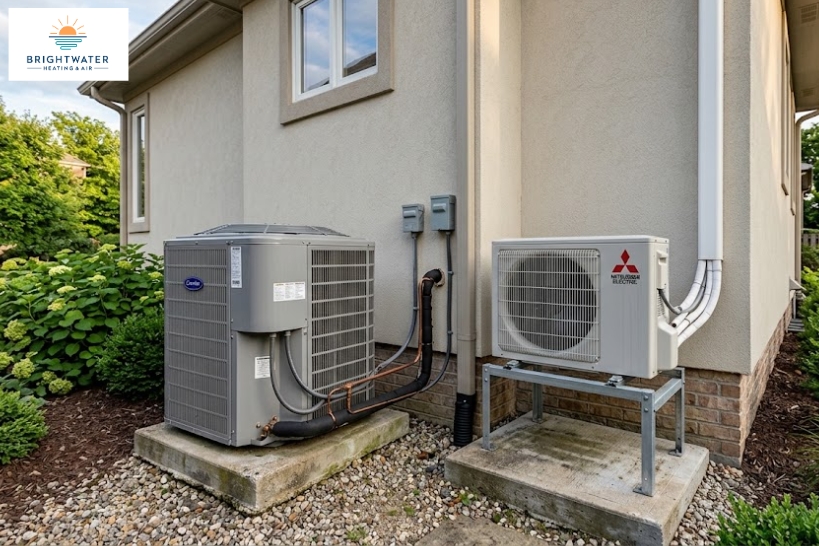
The table below compares mini-splits and central AC across the factors that matter most for an older Huntington Beach home. The notes after the table restate the key takeaways in plain language.
| Practical factor | Ductless mini-split | Central AC or heat pump |
| Installation disruption | Small openings for lines; no ducts required | Simple with sound ducts; duct work adds attic or wall access |
| Ductwork required | No | Yes |
| Comfort control | Room-by-room independent control | One thermostat; zoning can be added |
| Efficiency (SEER2) | Many models rated 16 to 30+ SEER2 | Must meet DOE regional minimums; higher-SEER2 models available |
| Heating included | Yes, heat-pump mode on most models | Yes with a heat pump; AC-only does not include heat |
| Indoor appearance | Wall heads, cassettes, floor units, or concealed ducted | Equipment mostly hidden; registers and thermostat visible |
| Nighttime noise | Indoor fan operates in the room | Blower noise typically farther from bedrooms |
| Filtration | Washable filters at each head | Supports larger media filters and whole-home IAQ equipment |
| Coastal lifespan | Salt exposure and maintenance affect outdoor-unit life | Same coastal corrosion factors apply to condenser and coil |
| Best-fit home | No-duct homes, additions, garages, problem rooms | Homes with sound ducts needing uniform whole-home comfort |
Mini-splits are often the better fit for homes with no ducts, garage conversions, additions, and rooms that consistently run warm. Central systems tend to be the better fit when existing ducts are sound and the goal is uniform whole-home comfort with equipment mostly hidden from view.
Neither system wins automatically based on proximity to the coast. Both have outdoor units that face the same salt-air conditions. Corrosion-aware equipment choices, thoughtful placement, and consistent maintenance matter for either path.
What Each Option Costs in Orange County
Compare the same project scope before deciding which option costs less. A single-zone mini-split for one garage is far less than a whole-home central replacement, but those are different projects solving different problems. A multi-zone ductless system covering the whole house can cost as much as a central replacement that reuses sound existing ducts.
| Project scope | Typical planning range* |
| Central AC replacement using existing sound ducts | About $5,000 to $12,000 |
| Single-zone mini-split for one room, addition, or garage | About $2,000 to $6,000 |
| Multi-zone mini-split serving most of the home | About $2,000–$14,500 |
| New ductwork added to a home without existing ducts | Often several thousand dollars on top of system cost |
Approximate planning ranges from Angi cost guides, reviewed in 2026. These are not Brightwater pricing or a quote. Equipment size, efficiency tier, permit fees, site access, and electrical work can change the final number.
Ductwork is often the deciding line. Replacing central equipment while keeping usable ducts may be less disruptive than installing ductless heads throughout the home. Adding central AC where no ducts exist requires new runs through attic, ceiling, or wall spaces, which adds both cost and construction work.
Mini-split costs rise with more zones, difficult line-set routing through stucco or around a slab, limited attic access, electrical panel upgrades, and higher-efficiency models. Central AC costs climb when ducts need repair, sealing, or resizing before the new equipment goes in.
The Hybrid Option Most Homeowners Miss
Many older Huntington Beach homes do not need to choose one system for the entire house. If the downstairs central system cools the main living areas adequately, adding one ductless head to the problem space is often the least expensive and least disruptive solution.
A single-zone mini-split in a hot upstairs bedroom, home office, or converted garage keeps that space comfortable without depending on whole-home cooling overnight. Most mini-split models provide efficient heat-pump heating as well, so the head works year-round.
The hybrid approach tends to make the most sense for older homes where the central system still has usable life but cannot reach one or two rooms. It avoids the cost of a full ductless retrofit and keeps a working system running. Ask whether the comfort problem is the whole house or just one room before committing to a full replacement.
Permits, Title 24 and HERS Testing in Huntington Beach
A new mini-split installation, central-system changeout, major duct alteration, or related electrical work typically requires permits and inspections in Huntington Beach. Confirm current requirements with the City of Huntington Beach Building Division before work begins. Ask who will pull the permit, what fees are included in the proposal, and what inspections the project will require.
California’s Title 24 energy code applies to HVAC replacements and alterations. The California Energy Commission administers these building energy efficiency standards. HERS verification may be required for certain system configurations, and duct testing can be triggered when ductwork is altered or replaced. Not every mini-split project follows the same HERS path. Ask which CEC documentation applies to your specific design before work starts.
Older homes also need an electrical readiness review. Adding a multi-zone heat pump or replacing gas heat with electric equipment can require a panel-capacity review, new dedicated circuits, or other electrical upgrades. The scope depends on the home’s current electrical load and the equipment plan.
Rebates and Tax Credits Worth Checking
Several programs may reduce the cost of a qualifying mini-split or heat pump in Orange County. Program terms, funding availability, and eligible equipment change, so verify the current status of each before relying on a rebate figure in your planning.
- TECH Clean California: A state program that offered incentives for qualifying heat pumps and ductless mini-splits. As of November 14, 2025, single-family heat pump HVAC incentives are fully reserved statewide and no longer accepting new reservations. Check current status at TECH Clean California’s official site before assuming this program is available for your project
- Federal 25C tax credit: This credit expired December 31, 2025, and does not apply to any equipment placed in service in 2026 or later. It was terminated early by the One Big Beautiful Bill Act. Homeowners who completed a qualifying installation by that date may still claim it on their 2025 return; it is not available for new 2026 projects. See the IRS’s Energy Efficient Home Improvement Credit page for details
- Southern California Edison: SCE offers rebate programs for qualifying high-efficiency equipment. Check current offers at sce.com at the time of purchase, as amounts and eligible models change.
Funding caps, eligible equipment lists, and program deadlines change. Confirm program status at the time of purchase, not at the planning stage.
Salt Air: What It Does to Either System
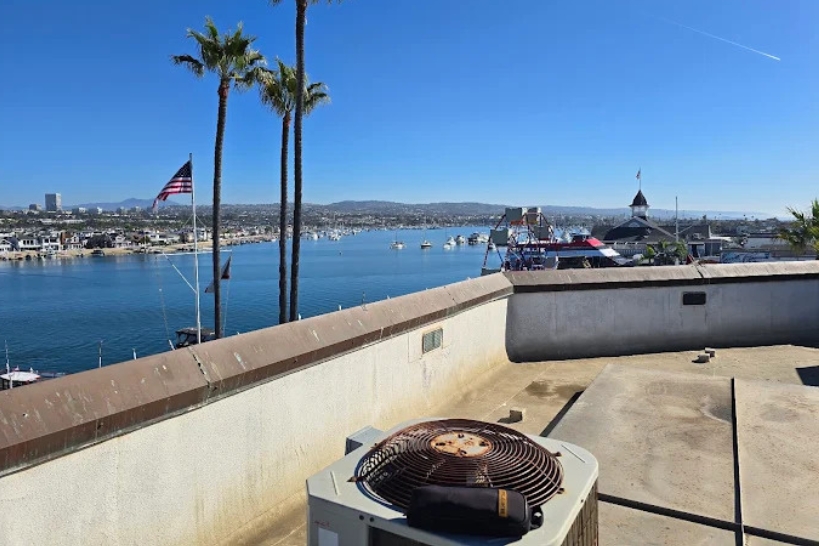
Salt air is a maintenance and placement factor, not a reason to favor one system type over the other. Both mini-splits and central AC use outdoor condensers, so both face added wear in Huntington Beach’s marine environment.
Salt film and humidity settle on outdoor coils, cabinet panels, fasteners, and electrical connections. Over time, that exposure can accelerate corrosion and reduce coil efficiency. For either system, place the outdoor unit away from direct ocean-facing exposure where the property allows, with clear airflow, proper drainage, and no sprinkler overspray reaching the cabinet.
Factory-applied or manufacturer-approved coastal coil coatings may help for homes close to the water. Review the manufacturer’s warranty language before applying any coating. A coating can slow corrosion but will not prevent all damage or guarantee warranty coverage.
Ductless systems have a simple indoor maintenance task: clean the reusable filters on a regular schedule. That said, ductless upkeep also includes professional cleaning of blower wheels, indoor coils, and condensate trays when buildup affects airflow or drainage. Central systems require regular filter changes, outdoor condenser cleaning, and duct condition checks.
A Brightwater Maintenance Membership covers either system on a consistent coastal service schedule, with attention to corrosion, drainage, airflow, and developing issues before they become breakdowns.
How to Decide: A Five-Question Checklist
Work through this checklist before choosing between a mini-split and central AC for your Huntington Beach home.
- Are your ducts sealed, properly sized, and accessible for repair? Good ducts often make central AC the simpler path. Missing ducts, ducts in a poor location, or ducts losing significant conditioned air can make ductless a better fit.
- Do you need uniform cooling throughout the home or separate room-by-room control? Central delivers consistent whole-home comfort. Mini-splits give each zone independent temperature settings.
- Are you cooling the whole house, an addition, or one persistently warm room? A hybrid system may resolve a hot bedroom, office, or converted garage with less disruption than replacing everything.
- Can your electrical service and installation path support the equipment? Panel capacity, new circuits, and line-set routing affect the practical cost and timeline of either option.
- What coastal maintenance will the outdoor unit need? Smart placement, drainage, corrosion-aware equipment choices, and a regular service schedule matter for long-term reliability near the coast.
The best choice depends on how your home moves air, where comfort problems occur, and what the installation actually requires. Start with a load calculation and an honest look at your ducts, electrical access, and site conditions.
Frequently Asked Questions
Can you add central AC to a house with no ductwork?
Yes, but adding central AC to a ductless home usually requires new duct runs through attic, ceiling, wall, or crawlspace areas. Construction access, routing, and surface repairs add both cost and disruption. In an older Huntington Beach home, a ductless or hybrid system may be the less invasive option.
Is a mini-split cheaper than central air in Orange County?
It depends on the scope. A single-zone mini-split for one room is often less expensive than a whole-home central replacement. A multi-zone ductless system can cost as much as central replacement using existing sound ducts. New central installation requiring new ductwork is typically the more involved project.
Will a mini-split cool my whole house?
Yes. A properly designed multi-zone mini-split system can cool an entire house. Each room’s cooling load, head placement, airflow path, insulation, and sun exposure must be considered before equipment is selected. Do not estimate the number of heads from square footage alone.
Do mini-splits work in a two-story home?
Yes. Mini-splits work especially well for hot upstairs bedrooms, lofts, and additions that a single downstairs thermostat cannot serve well. Separate zones let occupants adjust comfort room by room. If the downstairs central system is otherwise sound, a hybrid approach can add targeted upstairs cooling without replacing the whole system.
Do I need a permit for a mini-split in Huntington Beach?
Permitting is typically part of any mini-split installation in Huntington Beach. Confirm current requirements with the City of Huntington Beach Building Division and a licensed contractor before work begins. Title 24, HERS testing, and rebate eligibility can each depend on the scope of work and current code.
Can I keep my furnace or central system and add a mini-split?
Yes. Many homes use a mini-split alongside an existing furnace or central system. This hybrid option can serve a garage conversion, home office, guest room, or persistently warm upstairs bedroom without changing the rest of the home. Most mini-splits provide both cooling and heat-pump heating for year-round use.
Get a Load Calculation Before You Choose
The right system for an older Huntington Beach home depends on a room-by-room load calculation and a clear picture of duct condition, electrical capacity, and installation access. Square footage estimates and rule-of-thumb sizing are not reliable for retrofit projects in older coastal homes.
Brightwater Heating & Air serves Huntington Beach and northwestern Orange County. We assess both mini-split and central AC paths, explain the tradeoffs without pressure, and handle permits and installation from start to finish. CSLB #1004454.
Call (714) 316-3755 to Schedule Your Assessment Explore Our AC Installation Options