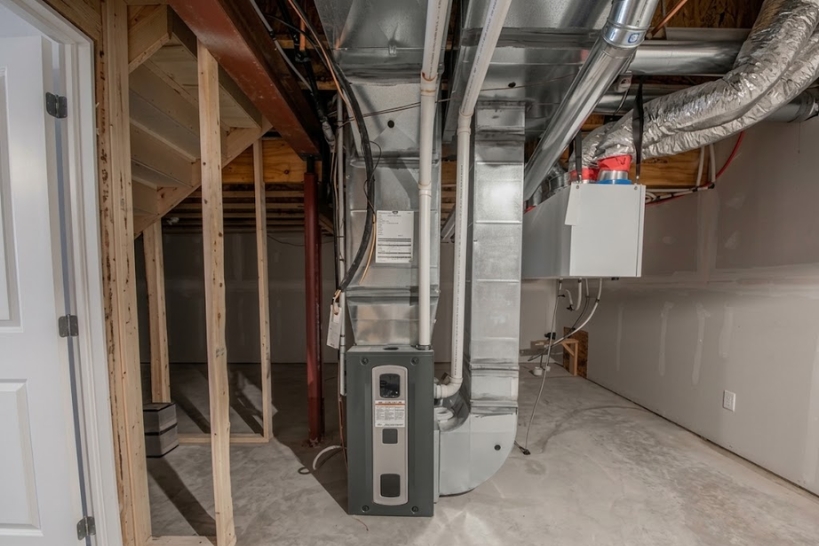
This page explains why a gas furnace may not start and what a homeowner can safely check before calling. It covers gas and carbon-monoxide safety first, then three checks you can complete without opening the furnace, then the eight most common causes in the order a licensed technician checks them. Brightwater Heating & Air is a licensed California HVAC contractor, CSLB #1004454, serving Huntington Beach and Orange County. No founding year is stated because it is pending client confirmation.
Safety alert: If you smell gas, leave the building. Do not touch light switches, appliances, the furnace switch, or the thermostat. From outside, call the SoCalGas emergency line at 1-800-427-2200. If a carbon-monoxide alarm sounds, leave the home and call 911.
A furnace can fail because of a thermostat setting, a power interruption, an airflow safety shutdown, or an ignition failure. Each can leave the system unresponsive.
The goal is to identify the safe next step without opening the burner compartment or bypassing a safety control. Start with three checks you can complete safely in a few minutes.
Start Here: Three Things to Check Before You Call
When a furnace won’t turn on, check the thermostat, the furnace power supply, and the air filter before making any calls. For Brightwater Heating & Air customers throughout Orange County, these three checks can rule out the most common problems without touching internal furnace components.
| What to Check | What to Do |
|---|---|
| Check the thermostat | Set the system to Heat and raise the temperature at least 3 to 5 degrees above the current room temperature. If the thermostat uses batteries, replace them now. A blank, flickering, or unresponsive display points to a thermostat or power issue. |
| Check the breaker and furnace power switch | Find the breaker for the furnace in your electrical panel and reset it once if it has tripped. Then find the furnace power switch, which often looks like a normal light switch on the wall near the unit, and confirm it is on. If the breaker trips again after reset, leave it off and call a professional. Repeated tripping signals an electrical problem. |
| Check the filter and blower access panel | Replace the filter if it is visibly clogged with dust or debris. After checking the filter, press the blower access panel firmly until it seats fully. Many furnaces have a door safety interlock that stops operation when the panel is loose or ajar. |
For more ways to avoid common thermostat and airflow errors, see our guide to HVAC troubleshooting mistakes in Huntington Beach homes.
Where DIY Stops
After checking the thermostat, breaker, furnace switch, filter, and access panel, stop and schedule service if the furnace still will not run. These are the reasonable homeowner checks. Resetting the furnace again is not a fix. A repeated safety shutdown is useful diagnostic information, not a reason to keep pressing reset.
Do not open the burner compartment or attempt to clean, adjust, reset, or test the flame sensor, gas valve, igniter, pressure switch, limit switch, control board, or wiring. These parts may involve gas, high voltage, hot surfaces, combustion, or safety lockouts that exist to prevent a more serious problem.
A licensed HVAC professional can safely test the furnace, identify the root cause, and explain repair options before work begins. Before your appointment, use our HVAC diagnostic checklist to note what the furnace does, any sounds or error lights, and when the problem first started.
The Most Common Causes, in the Order a Technician Checks Them
When burners light but shut off within 2 to 5 seconds, the furnace may be failing to prove the flame, not failing to receive a heat call. A typical startup sequence runs: thermostat call, inducer start, igniter glow or spark, burner ignition, flame confirmation, then blower operation. Where that sequence stops gives a technician useful diagnostic information.
The furnace is completely quiet: thermostat or low-voltage control issue
If nothing happens after setting the thermostat to Heat and raising the setpoint 3 to 5 degrees above room temperature, the thermostat may not be sending a heat call. Settings, batteries, wiring, calibration, or a low-voltage control issue may be involved. Homeowner-fixable: No, beyond checking settings and accessible batteries.
Dirty air filter or airflow safety shutdown
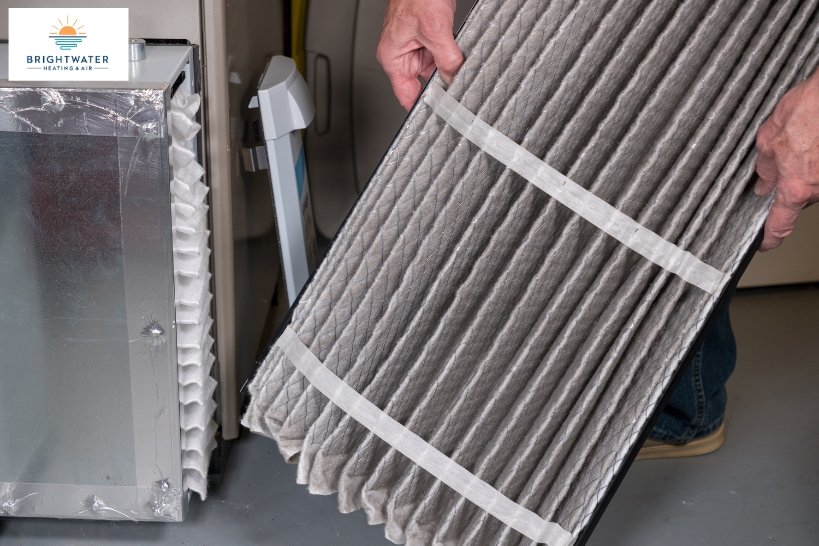
A severely clogged filter or blocked supply registers can restrict airflow and cause the heat exchanger to overheat. The limit safety control then stops operation to protect the equipment. Homeowner-fixable: Yes, for replacing a standard disposable filter and uncovering blocked registers.
Gas supply shut off at the valve
If a gas stove or water heater is also not working, the furnace may have a gas-supply issue or a closed shutoff valve. If there is no gas odor, you may check whether the exterior valve handle runs parallel with the pipe. Homeowner-fixable: No, beyond that observation. If you smell gas, leave the home and call the utility.
Inducer runs but the igniter never glows: pressure switch or control problem
The inducer fan must establish safe venting before the furnace can light. A failed pressure switch, venting blockage, or control-board issue can stop the startup sequence at this step. Homeowner-fixable: No. Do not open the burner compartment or test safety switches.
Furnace clicks or glows but will not light: igniter or gas-valve issue
Older furnaces may use a standing pilot light, while most newer systems use electronic ignition. A pilot assembly, igniter, or gas-valve problem can prevent the burners from lighting. Homeowner-fixable: No for electronic ignition components. Follow your model manual only for manufacturer-approved pilot relighting instructions.
Burners light then shut off after a few seconds: flame sensor issue
Burners that light and shut off within 2 to 5 seconds often point to a flame-sensing problem. The furnace may retry several times before entering a safety lockout. Homeowner-fixable: No. A technician should diagnose the flame sensor and related ignition components.
Furnace has PVC venting and will not complete startup: condensate drainage
High-efficiency furnaces with PVC vent pipes produce condensate water during operation. A blocked condensate drain, trap, pump, or float switch can prevent safe startup. Homeowner-fixable: No, beyond noting visible standing water outside the furnace compartment. A technician should inspect the drainage and venting system.
Furnace starts but no warm air reaches rooms: blower problem
If burners run but warm air never reaches the rooms, or the furnace hums before shutting down, the blower motor, capacitor, or a safety lockout may be involved. Blower failure can cause overheating and protective shutdown. Homeowner-fixable: No.
Before calling, record what the furnace does, how long it runs, any sounds, and any visible fault codes. For warning signs that can appear before a no-heat failure, see our post on recognizing hidden HVAC problems.
Why Orange County Furnaces Fail on the First Cold Night
A furnace can sit quietly all year, then fail the first time you ask it to heat. In Huntington Beach, that happens often because many systems go unused for roughly eight months during our mild coastal weather. The first cold night does not always create the problem. It often exposes a part that weakened, collected debris, or seized during the long idle period.
Dust on the burners, heat exchanger, and nearby surfaces can create a brief burning-dust smell when heating starts. That smell should fade within the first 10 to 15 minutes of operation. A smell that stays strong, turns electrical or smoky, or appears with visible smoke is not normal. Shut the furnace off and schedule an evaluation. If you smell gas, leave the home and follow SoCalGas emergency guidance.
Coastal conditions add another layer of wear. In Huntington Beach, Seal Beach, Sunset Beach, Newport Beach, and Costa Mesa, salt air and marine humidity can contribute to corrosion on exposed metal parts and electrical connections. Corrosion does not always stop a furnace immediately, but it can weaken connections and components over time.
After a long shutdown, a technician may find any of the following:
- A stuck or failing inducer motor that cannot begin the safe startup sequence
- A weak igniter that no longer glows or sparks reliably
- A flame-sensing issue that lets burners light briefly, then shuts them down
- Corroded electrical connections that interrupt power or control signals
These findings help narrow a professional diagnosis before any repair begins. A preseason heating inspection can catch many of these concerns before the next cold spell. Brightwater’s Maintenance Membership offers a practical way to schedule preventive heating checks instead of waiting for the first no-heat call.
What the Blinking Light on Your Furnace Means
Most furnaces built in the last 20 years have a small LED indicator on the control board. When the system detects a fault, that light flashes in a coded pattern. Three flashes followed by a pause and two more can mean something entirely different from five flashes followed by a long pause.
You do not need to decode the pattern yourself. The legend that explains each code is printed on a label on the inside of your furnace’s blower access panel. Open the lower front panel and look at the label on the inside of the door or the interior wall facing you. That label is specific to your furnace model.
When you call Brightwater Heating & Air, read the flash pattern to the technician. Count the number of flashes per sequence, note how long the pause is, and describe what the furnace does right after the code. That information lets the technician identify the likely cause before arriving, which means a faster diagnosis and a better chance of carrying the right parts.
If the LED is dark and the furnace has no power at all, check the breaker and the furnace power switch first. A completely dark LED means the control board has no power, which is a different starting point than a flashing fault code.
When It Is Not Worth Fixing
A furnace that fails once after a long idle season is usually a repair job. A furnace that fails repeatedly in the same season, requires a major component every few years, or has a suspected cracked heat exchanger calls for a different conversation.
A cracked heat exchanger can allow combustion gases to enter living space. It is not something a homeowner can confirm from a visual inspection. If a technician finds evidence of a cracked heat exchanger, replacement is the appropriate next step.
Furnaces over 15 to 20 years old with recurring failures often cost more to maintain than to replace, particularly when newer equipment runs more efficiently. For a full picture of repair-versus-replace considerations, visit our HVAC system replacement page.
Frequently Asked Questions About a Furnace That Will Not Turn On
Why does my furnace turn on and then shut off after a few seconds?
Burners that light and shut off within a few seconds often point to a flame-sensing problem. Other combustion, venting, or control faults can cause the same pattern, so do not keep resetting the furnace or attempt to clean the flame sensor yourself. If this happens more than once, schedule a professional diagnosis.
Can a dirty filter stop my furnace from turning on?
Yes, a severely clogged filter can restrict airflow, contribute to overheating, and trigger a safety shutdown. Replacing a standard dirty filter is an appropriate homeowner step, provided the furnace is safe to access. If the furnace still will not start after the filter change, it needs professional diagnosis.
Where is the reset button on a furnace?
Many furnaces do not have a single reset button intended for homeowners. The safe reset steps are confirming that the thermostat is set correctly and resetting a tripped breaker once. Do not press internal rollout, limit, or manual-reset switches, because they may indicate an overheating or combustion-related safety problem.
Is the burning smell when I first turn on the heat normal?
A light dust smell can be normal for the first 10 to 15 minutes after a long Orange County heating idle season. Persistent burning, electrical, smoky, or gas odors are not normal. Shut the system off for burning or electrical smells. If you suspect gas, leave the home without touching any switches and call the gas utility.
Does my furnace have a pilot light?
Older furnaces may have a standing pilot light, while most newer systems use electronic ignition or a hot-surface igniter. Check the furnace model manual for manufacturer-approved pilot instructions before doing anything. An electronic igniter is not a homeowner repair and should be diagnosed by a licensed HVAC professional.
Should I call for emergency service or wait until morning?
Call emergency services or the gas utility immediately for a gas odor, carbon-monoxide alarm, smoke, sparking, or any fire risk. For a heater not working in Huntington Beach without those hazards, waiting may depend on outdoor temperatures, vulnerable household members, and available backup heat. Brightwater Heating & Air offers 24/7 emergency service, with diagnostic fees disclosed before scheduling.
Get Your Heat Back on in Huntington Beach
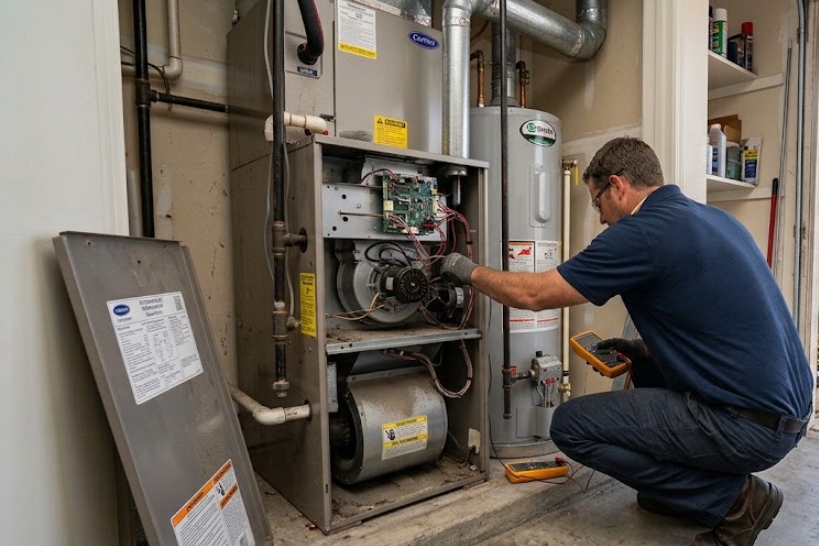
If your furnace still will not start after checking the thermostat, breaker, furnace switch, and filter, call Brightwater Heating & Air. We serve Huntington Beach, Seal Beach, Westminster, Fountain Valley, Costa Mesa, and Newport Beach. Our team handles furnace diagnosis and repair with licensed technicians and no surprise pricing. CSLB #1004454.
For furnace repair in Orange County, visit our furnace repair page or contact us online. For urgent after-hours concerns, our emergency HVAC repair service is available 24/7.
Schedule Service Online Call (714) 316-3755