
By Sean Pierik, California Licensed HVAC Contractor, CSLB #1004454
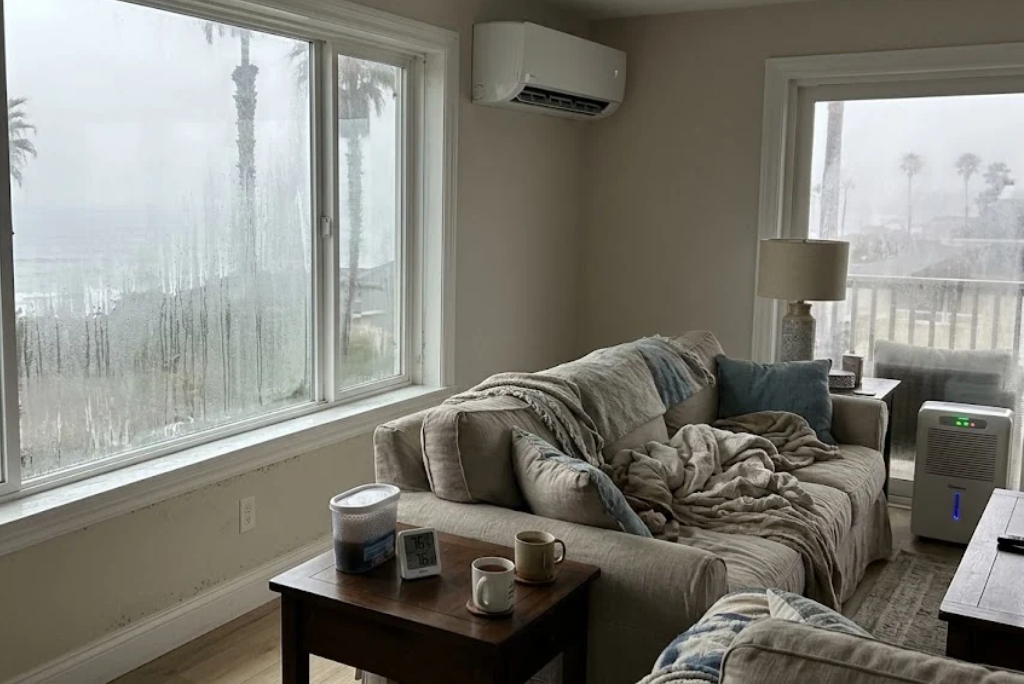
A cool winter morning in Huntington Beach can leave windows sweating, bedding clammy, and the house feeling damp in winter even when the heater is running.
If your house feels damp in winter, coastal moisture is often the reason, even when it is not raining indoors. Moist marine air enters through gaps, open doors, and cracked windows, then meets cool glass and exterior walls, where water vapor condenses. Mild weather means your AC may not run long enough to remove much moisture.
Persistent dampness is not automatically an HVAC failure, but it is not something to ignore. In Huntington Beach, Newport Beach, Seal Beach, and Costa Mesa, recurring humidity affects comfort, closets, windows, and indoor air quality. It may also signal a leak or crawlspace moisture issue.
This guide covers the main causes, the humidity range to watch, practical fixes, and when to call for help.
Signs Your Home Is Holding Too Much Moisture
Can your home reach the thermostat setting and still feel cold, clammy, or musty? Yes. A cold house and a damp house can feel similar, but moisture leaves clues that a thermostat adjustment will not solve.
Condensation on windows in winter
Water on the room-side glass or frame forms when moisture in warm indoor air reaches a cold surface. Visible droplets show that indoor air contains enough moisture to condense. Fog or moisture between panes points to a failed window seal instead.
Musty closets and exterior-wall rooms
Closets, shoe storage areas, and rooms along exterior walls often have limited airflow. When fabrics, shoes, or stored items hold moisture, musty odors become more noticeable in these enclosed spaces.
Mildew that returns after cleaning
A one-time spot on grout or caulk may be a cleaning issue. Mildew that repeatedly returns on bathroom ceilings, grout, or caulk suggests moisture is lingering because ventilation or drying is inadequate.
Warped wood and damp-feeling fabrics
Cupped or swollen wood, towels that dry slowly, and bedding that feels clammy can all be signs of elevated indoor moisture. These symptoms are different from simply feeling chilly in a cool room.
Allergy and irritation flare-ups
These symptoms are not a diagnosis, but recurring irritation is a reason to check humidity, ventilation, and air filtration. Place inexpensive hygrometers in the main living area and the most affected bedroom for several days, including after showers and overnight.
For a broader picture, indoor air quality testing can help identify specific moisture or airborne concerns beyond what a hygrometer shows.
The Humidity Range to Aim For
The EPA recommends 30% to 50% relative humidity indoors, where practical, and advises against sustained levels above 60%, which can support mold growth (U.S. Environmental Protection Agency, Mold and Moisture). In coastal Orange County, a brief rise after cooking, showering, a foggy morning, or a winter storm is normal. The concern is humidity that stays elevated day after day, particularly in bedrooms, closets, or bathrooms.
Window condensation calls for action sooner. If room-side glass is regularly wet, lower indoor moisture and improve airflow around the windows, even if your hygrometer reads below 60%. Cold glass can reach its dew point before your home reaches the top of the general comfort range.
Track readings in two rooms for 3 to 7 days. Record morning, evening, and post-shower peaks to separate short-term moisture from a persistent issue. Raising the thermostat may make rooms feel warmer, but it does not remove moisture from the air.
Why a Heat Pump or Furnace Alone Does Not Fix It
“If I run the heat longer, will the house dry out?” Not necessarily. Heat can lower the relative humidity reading because warmer air holds more water vapor. But unless moisture is exhausted outdoors, exchanged through ventilation, or removed by a dehumidifier or active cooling coil, that water vapor stays inside.
This explains a common nighttime pattern. Your furnace warms the house in the evening, then indoor air and surfaces cool overnight. The retained moisture can condense again on cold window glass, aluminum frames, or exterior corners.
Coastal homes often get little HVAC-based dehumidification in winter because the thermostat is satisfied quickly. The AC or heat pump cooling coil, which normally condenses and drains moisture, may not run long enough to remove a meaningful amount.
Humidity-aware thermostat settings can help you monitor conditions, but controls cannot replace a moisture-removal strategy when indoor humidity stays elevated.
Portable vs. Whole-Home Dehumidifiers
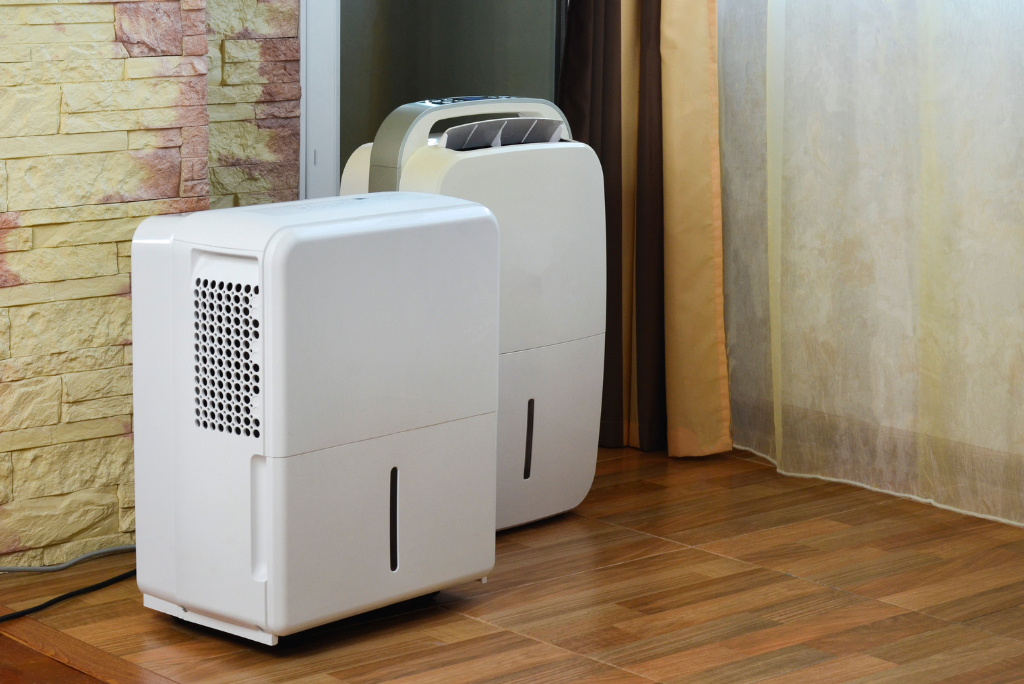
A Huntington Beach homeowner may find one damp bedroom after a winter storm while the rest of the house feels fine. In that case, whole-home equipment may not address the right problem if the real issue is a nearby leak, wet crawlspace, or poorly vented bathroom.
Start with hygrometer readings in several areas and check for a moisture source, especially when one room is much worse than the rest. Relative humidity that stays elevated throughout the home calls for a different approach than moisture limited to one space.
| Option | Best for | Advantages | Limits |
|---|---|---|---|
| Portable dehumidifier | One damp room, closet, ADU, or a two-week test | Affordable; confirms whether dehumidification helps; easy to move | Noisy, limited area, requires tank emptying or drain connection |
| Whole-home dehumidifier | Persistently high humidity throughout a ducted home, especially on mild days when AC is off | Automatic drainage and consistent humidity control throughout | Requires sizing, duct integration, power, and condensate routing |
| Source-specific repair or crawlspace fix | Plumbing leak, wet crawlspace, incorrectly vented exhaust, or isolated garage | Fixes the actual moisture source rather than masking it | May require repairs outside HVAC scope |
A variable-speed AC or heat pump can remove moisture while it is cooling, but it may not solve cool-morning humidity when there is little cooling demand. For coastal homes with persistent humidity, a professional assessment of duct condition, crawlspace moisture, and equipment sizing will point to the right solution.
Simple Fixes to Try First
What can you do this week before assuming you need new equipment? Start by limiting moisture at its source, then watch for improvements in condensation and that clammy indoor feeling.
1. Use exhaust fans consistently. Run the bathroom fan during showers and for 15 to 30 minutes afterward. Use the kitchen exhaust fan and keep pot lids on while cooking.
2. Avoid drying laundry indoors. If you cannot avoid it, make sure the dryer is vented outdoors or run a portable dehumidifier nearby.
3. Manage window condensation. Wipe sills and frames each morning. Leave blinds slightly open so warm room air can reach cold glass, and replace worn weatherstripping around obvious drafts.
4. Ventilate when outdoor air is drier. Open windows briefly during dry Santa Ana conditions. Avoid leaving a window cracked during fog, rain, or humid marine mornings.
5. Check where exhaust vents discharge. Dryer, bathroom, and range vents should exit outdoors, never into an attic or crawlspace.
When to Call a Professional
Call for a professional evaluation if any of these apply:
- Mold returns after cleaning
- Ceilings or walls show water stains or active moisture
- You suspect a plumbing leak or detect damp crawlspace odors
- Ducts feel damp or sweat in winter
- Humidity remains elevated throughout the home after trying these steps
We can assess humidity patterns, HVAC runtime, drainage, duct conditions, and likely moisture paths before recommending equipment. For seasonal comfort guidance beyond winter, our May Gray and June Gloom tips for Huntington Beach cover the warmer months as well.
How to Fix a House That Feels Damp in Winter
If your house feels damp in winter, the right solution starts with understanding how widespread the problem is and where the moisture is coming from. In coastal Orange County, humid marine air, cool surfaces, and shorter AC runtime often work together to leave moisture indoors.
- One damp room or a recent change: Track humidity with a hygrometer, check exhaust fans, and look for local sources. A portable dehumidifier can confirm whether moisture control improves that space.
- Elevated humidity throughout the home: Schedule an assessment of HVAC runtime, ducts, drainage, ventilation, and moisture pathways. A properly sized whole-home dehumidifier can provide consistent humidity control during mild coastal weather.
- Water stains, active leaks, or a wet crawlspace: Repair the moisture source first. Dehumidification manages air moisture, but it cannot fix a leak or drainage problem.
The goal is manageable humidity that protects comfort, finishes, and indoor air quality. We can evaluate your home and recommend the right path forward.
Request a Free AssessmentFrequently Asked Questions
Why is my house humid in winter when it is cold outside?
Cold coastal air can still carry plenty of moisture, especially during fog, rain, and marine-layer conditions in Orange County. When that air enters your home, cool indoor surfaces make the moisture more noticeable as clamminess, slow-drying fabrics, or condensation. Track indoor relative humidity for several days, particularly in the morning and after showers, to see whether the problem is temporary or persistent.
Does running the furnace or heat pump remove humidity?
No. Heating your home does not remove water vapor. A furnace or heat pump in heating mode can lower the relative-humidity percentage by warming the air, but the actual moisture stays indoors. Reliable moisture removal requires ventilation, a dehumidifier, cooling-system runtime, or fixing a moisture source.
Why do I have condensation on my windows in winter?
Interior window condensation forms when humid indoor air touches cold glass or aluminum frames. Check the room humidity level, keep blinds slightly open for airflow, and wipe pooled water from sills. Moisture between double-pane glass usually indicates a failed window seal rather than an indoor humidity issue.
Do I need a whole-house dehumidifier in Orange County?
A whole-house dehumidifier can be worthwhile when elevated humidity affects multiple rooms consistently and basic source-control steps have not helped. It is most useful during mild coastal weather, when the AC does not run long enough to remove moisture on its own. Try a portable unit first if one bedroom or closet is the main concern.
Why does my coastal home smell musty even when I cannot see mold?
A musty smell can develop before visible mold appears, especially in closets, crawlspaces, ducts, and areas with limited airflow. Address a persistent odor promptly, particularly if you also find visible growth, water stains, or recurring respiratory irritation. Fixing the moisture source is more effective than covering the smell.
If you are also concerned about dust, allergens, or airborne particles, our air filtration options can improve particle control. Filtration does not remove humidity from the air.