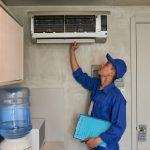
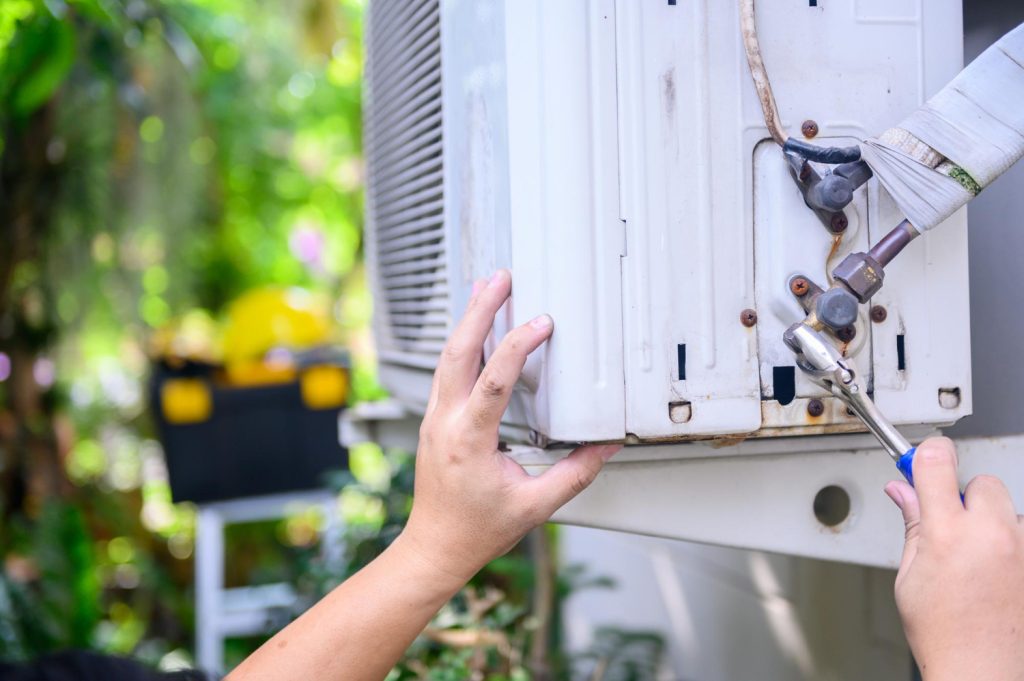
It is July in Orange County and your air conditioner is running nonstop, but your home’s temperature will not budge. Before you call for service, there are seven safe checks you can run yourself. If any step reveals refrigerant loss, electrical faults, or a tripped breaker, stop and call a pro. Start with the fastest diagnostic first: measuring your system’s temperature drop.
1. Measure Your AC’s Temperature Drop (Delta T)
Run your AC for 10 to 15 minutes. Measure the air temperature at a return grille, then measure the air coming out of a nearby supply vent while confirming that airflow feels strong.
A healthy unit produces a 15 to 22-degree difference, called Delta T. If your system hits this target but the house still feels warm, your AC is functional but fighting heavy solar gain or poor insulation. If the Delta T is low, move on to the airflow and outdoor-unit checks below.
2. Audit Your Thermostat and System Settings
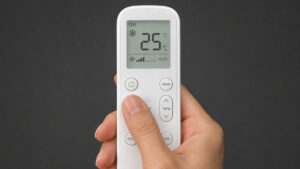
A settings mismatch can mimic a system failure. Before calling for repair, run a quick control audit:
- Set the thermostat to COOL with a setpoint below the current room temperature.
- Switch the fan to AUTO. The ON setting runs the fan continuously, blowing uncooled air between cycles.
- Check for dead batteries in the thermostat.
- Confirm eco-schedules are not raising temperatures mid-day.
- For zoned systems, confirm the correct thermostat is calling for cooling.
If the air stays warm after 30 minutes, move to airflow troubleshooting.
3. Check for Dirty Filters and Airflow Restrictions
A clogged filter is the most common reason an AC runs but fails to keep up. It chokes airflow, forces long run times, and can cause the indoor coil to freeze.
Pull the filter and hold it up to a light. If it blocks the light or looks dark and packed, replace it now with the arrow on the frame pointing toward the blower. Also confirm that furniture or rugs are not blocking return grilles.
After swapping the filter, give the system an hour to stabilize before adjusting the thermostat further. If filters clog unusually fast, pet hair, construction dust, or heavy July run times are the typical causes.
4. Balance Airflow and Manage Your Home’s Heat Load
Orange County homes often have distribution problems rather than equipment failures. Closed rooms, blocked vents, and upstairs heat gain all prevent even cooling. Start with these visual checks:
- Open all supply registers throughout the house.
- Clear furniture, rugs, or drapes away from vents.
- Close blinds on sun-facing windows during peak hours.
- Avoid running the oven or dryer during the hottest part of the day.
If one or two rooms stay warm while the rest of the house cools, you likely have a duct leak or an airflow imbalance. In multi-story homes, an upstairs lag usually points to zoning limits, not a broken system. If airflow feels weak at every vent, that points to a blower or duct restriction that needs professional attention.
5. Clear and Rinse Your Outdoor Condenser Coils
A blocked outdoor condenser cannot release heat, so the system keeps cycling without cooling the house.
Switch off power at the disconnect box first. Clear yard debris to give the unit at least two feet of clearance on all sides. Confirm the fan spins freely and listen for unusual grinding. Do not open panels.
With power off, gently rinse the coils from the top down using a garden hose. Avoid pressure washers, which bend the delicate aluminum fins. In Huntington Beach and Seal Beach, salt-air film builds quickly and periodic rinsing restores heat transfer.
If the coils are heavily matted with salt or debris, professional air conditioning repair is the next step to get your system performing again.
6. Safe Thawing Procedures for Frozen Coils
Ice on the indoor coil is a common cause of ac not cooling in Orange County homes. Freezing usually points to restricted airflow or low refrigerant.
Thaw the system safely to protect your compressor. Set the thermostat to OFF and the fan to ON. The fan will melt the ice over several hours. Watch the overflow pan closely to protect your flooring.
Critical warnings:
- Do not scrape or chip ice off delicate coils.
- Do not run the AC while the coil is frozen.
Once the coil is dry, replace the filter and restart the system. If it refreezes, that is a refrigerant or airflow issue requiring a professional diagnostic.
7. Know When to Stop DIY and Call a Professional
Some AC problems are beyond safe DIY repair. Stop troubleshooting and call a tech if you notice any of these:
- The outdoor unit hums but the fan does not spin, or you hear repeated clicking.
- A breaker trips repeatedly, you smell burning, or you see damaged wiring.
- Delta T is still low after cleaning filters and clearing the condenser.
- The coil refreezes after a full thaw.
These symptoms point to a capacitor failure, refrigerant leak, or compressor issue. Each requires specialized tools and training.
Call (714) 316-3755 for Same-Day Service
Frequently Asked Questions: AC Not Cooling in Orange County
Why is my AC not keeping up on the hottest days in Orange County?
When the Delta T hits 15 to 22 degrees (see Fix 1 above) but the house still feels warm, your system is working correctly but struggling against heavy solar gain, not failing mechanically. Close sun-facing blinds and reduce indoor heat sources like ovens and dryers during peak hours.
My AC is running but not blowing cold air. Should I shut it off?
Yes. Running an AC that blows warm air or has frozen coils risks compressor damage. Set the thermostat to OFF and the fan to ON to thaw safely. If you smell burning or a breaker trips, cut power completely and call for emergency HVAC service.
Why is my AC not cooling in Huntington Beach when inland homes have no issues?
Coastal systems face salt air and elevated humidity. Salt film accumulates on outdoor coils, blocking heat transfer and accelerating corrosion. Rinse the condenser coils with fresh water regularly and keep two feet of clearance around the unit.
How much does an AC diagnostic visit cost in Orange County?
Professional diagnostic visits in Orange County typically run $99 to $150. Common repairs such as a capacitor or contactor replacement often cost $150 to $400. More involved work, like a condenser fan motor swap or refrigerant leak search, varies by system age and accessibility.
When do I need refrigerant, compressor, or hard-start service?
Call a tech if coils keep freezing after a clean thaw, if Delta T stays low after filter and condenser checks, or if the outdoor unit clicks and hums without starting. These issues require diagnostic tools that go beyond safe DIY work.
Get Your Orange County Home Cooling Again
Most ac not cooling orange county calls stem from dirty filters, blocked condensers, or thermostat settings rather than a failed compressor. Run through these seven checks and you may resolve the problem in under an hour. If the issue involves refrigerant, a frozen coil that keeps returning, or electrical faults, reach out to Brightwater Heating and Air. We offer same-day service throughout Orange County with no after-hours markup.