If you are researching the typical AC installation cost in Huntington Beach, you have probably seen broad national averages that look incredibly affordable. When you request a local estimate, though, those generic numbers rarely match reality. Quotes along the Orange County coast often come back higher due to strict local building codes, specialized labor, and the need for marine-grade salt-air protection.
This guide helps you make sense of those local variables so you can budget accurately before calling a contractor. Below, we cover a tiered cost table for coastal homes, break down how ductwork, HERS testing, and electrical setups shape your final price, and clarify the difference between a fresh system installation and a standard replacement.
As a local, owner-operated business, Brightwater Heating & Air designs systems specifically built to handle our harsh coastal environment. To help you plan your upcoming upgrade, we have broken down the baseline numbers by equipment tier below.

Understanding Your AC Installation Cost in Huntington Beach
While national sites often quote $4,000 to $6,000, a realistic AC installation cost in Huntington Beach ranges from $8,500 to over $18,000 due to strict California Title 24 codes and coastal requirements.
Here is how installed costs break down by equipment tier:
- Budget tier (smaller homes or rentals): Single-stage 14 SEER2 system with basic digital thermostat — estimated installed cost $8,500 to $11,000.
- Mid-range tier (average single-family home): Two-stage 16 SEER2 system with smart thermostat and coil protection — estimated installed cost $11,000 to $14,500.
- High-efficiency tier (multi-story or coastal homes): 18+ SEER2 variable-speed or heat pump with marine-grade coating — estimated installed cost $14,500 to $19,500+.
These ranges cover a standard equipment replacement, which swaps your old condenser and indoor coil using your existing, functional ductwork. A brand-new installation, where no central air currently exists, requires adding new ducts, return vents, and electrical upgrades — adding $4,000 to $10,000 to the total.
Three main factors will push your estimate into a higher tier:
- The 2026 Refrigerant Transition: Environmental mandates require new systems to use next-generation A2L refrigerants like R-454B or R-32. These units require built-in safety sensors and spark-proof electrical parts, which increases equipment costs compared to older R-410A systems.
- Coastal Salt Air Protection: Condensers near the ocean need specialized epoxy coil coatings and stainless steel hardware to prevent premature corrosion.
- System Complexity: Upgrading to a variable-speed system or an all-electric heat pump increases energy efficiency but carries a higher initial cost.
What to Compare When Getting AC Installation Quotes in Huntington Beach
Two local quotes can look $2,000 apart until you compare what is actually included. Accepting the lower bid often means paying for municipal permits, duct testing, and equipment haul-away fees as surprise add-ons mid-project.
To evaluate your AC installation cost in Huntington Beach accurately, use this coastal-focused checklist to verify every proposal:
- Equipment specs: Specific model numbers, SEER2 efficiency ratings, and next-generation A2L refrigerant.
- Manual J load calculation: Sizing calculations that prevent your system from short-cycling in our humid beach climate.
- Labor scope: Explicit line items for a new condenser pad, line set, drain lines, and startup commissioning.
- Permits and HERS testing: Mandatory Title 24 energy compliance steps that lowball bids often leave out.
- Disposal: The cost to haul away and legally dispose of your old equipment.
- Coastal protection: Marine-grade coil coatings to resist salt-air corrosion, listed as a separate option.
Verifying these line items helps you compare contractors fairly. Next, we will look at how local home layouts act as major cost multipliers.
How Ductwork Impacts Your AC Installation Cost in Huntington Beach
A premium condenser cannot fix leaky, undersized ductwork. In older Huntington Beach homes built between the 1960s and 1980s, tight attics often hide choked returns, crushed flex runs, and degraded insulation. These hidden issues restrict airflow and quietly inflate your overall AC installation cost in Huntington Beach.
To avoid overbuying, we group duct solutions into three basic buckets: minor sealing, partial replacement of damaged sections, or a full system redesign. If your home was built before 1980, we also check for asbestos-insulated materials to make sure removal is handled safely and legally.
Once your indoor airflow is secure, the focus shifts outdoors, where coastal salt air creates unique installation and pricing challenges compared to inland Orange County homes.
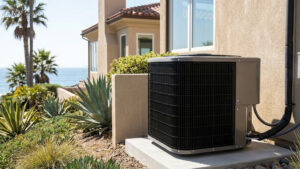
Coastal Protection and Your AC Installation Cost in Huntington Beach
Salt air can cut an outdoor condenser’s lifespan in half. For homes within three miles of the water, coastal exposure is a major factor in your total AC installation cost in Huntington Beach.
You are in a high-exposure zone if your home faces direct ocean winds or shows visible rust on outdoor metals. If you plan to stay long-term, consider these quote add-ons:
- Coil coatings: Epoxy barriers that prevent premature refrigerant leaks.
- Smart placement: Shielding the unit from wind while keeping safe airflow.
- Stainless hardware: Rust-resistant fasteners that keep the cabinet secure.
Preventative care also protects your investment long-term. Joining a maintenance membership plan keeps your system clean, catches early corrosion before it becomes a repair bill, and can extend your equipment life significantly.
Next, we will look at non-optional installation costs: permits and HERS testing.
How Permits and HERS Testing Impact Your AC Installation Cost in Huntington Beach
Skipping city permits to lower your upfront AC installation cost in Huntington Beach almost always costs more in the long run through fines and resale delays.
A legal installation requires city oversight to confirm safety and code compliance. California Title 24 regulations also mandate HERS (Home Energy Rating System) testing to verify duct leakage and airflow limits.
A reputable quote always includes:
- Permit and inspection coordination
- Independent HERS rater testing fees
These line items protect you from failed inspections and costly system rework. Since you are paying code-level costs anyway, do not overlook the utility rebates and federal tax credits that can significantly reduce your net investment.
Lowering Your AC Installation Cost in Huntington Beach with Rebates
Are you counting on a rebate to lower your AC installation cost in Huntington Beach? Do not sign a contract based on a promise. Funding rules change constantly.
Look into three buckets: local SCE or SoCalGas rebates, state programs like TECH Clean California (subject to frequent funding shifts), and federal IRA Section 25C tax credits.
Use this checklist before signing any contract:
- Ask your contractor: Which rebates apply to my ZIP code and equipment?
- Assign paperwork: Who files the claims, you or the contractor?
- Keep records: Save an itemized invoice listing all system model numbers.
Planning Your AC Installation in Huntington Beach: A Four-Step Framework
Ready to move forward? Here is a clear four-step approach to map out your upcoming coastal project and secure comparable quotes without hidden surprises:
- Pick your performance tier: Balance your upfront equipment budget against long-term energy savings and marine-grade durability.
- Assess exposure and existing infrastructure: Confirm your current ductwork condition, electrical panel capacity, and how much salt-air corrosion protection your home’s location requires.
- Verify building codes and incentive status: Make sure your chosen contractor accounts for city permits, mandatory Title 24 HERS testing, and any active local utility rebates.
- Request an itemized proposal: Ask for exact equipment model numbers, warranty terms, and clear labor scopes rather than vague estimates.
At Brightwater Heating & Air, owner Sean Pierik personally performs and supervises every install, providing honest diagnostics with zero commissioned sales pressure. Start by visiting our AC installation services page to explore your system options, then contact us to schedule an accurate, in-home evaluation.
Call (714) 316-3755 for a Free Estimate
Request a Free Estimate Online
Frequently Asked Questions
What is the average AC replacement cost in Huntington Beach?
The average AC replacement cost in Huntington Beach ranges from $8,500 to $14,500. This baseline assumes your existing ductwork is functional and includes standard split-system equipment, municipal permits, and mandatory Title 24 testing. Your total cost will increase if your project requires new ductwork, marine-grade coastal coatings, or a heat pump conversion.
Why is the new AC unit price higher in 2026 than older online guides?
Prices are higher in 2026 due to the federally mandated HVAC transition to next-generation A2L refrigerants like R-454B or R-32. These systems require redesigned equipment with built-in leak detection sensors and spark-proof electrical controls. The actual price increase depends on the system type, capacity, and SEER2 efficiency tier you select.
Do I need a permit to replace my AC in Huntington Beach?
Yes. California building codes require a municipal permit for all air conditioning replacements in Orange County. Skipping a permit can result in city code enforcement fines, voided equipment warranties, and major complications during future home sales. Brightwater Heating & Air handles the entire permit and mandatory HERS testing process for you.
Can I replace just the outdoor unit and keep my furnace?
Replacing only the outdoor condenser is generally not recommended due to system compatibility and efficiency regulations. Mismatched indoor and outdoor components degrade energy efficiency, void manufacturer warranties, and risk premature compressor failure. A professional compatibility check will determine if your existing furnace or air handler can support a modern A2L system.
Do I really need coastal corrosion protection if I am not right on the sand?
Yes. Corrosive salt air and heavy coastal fog travel up to three to five miles inland in Huntington Beach. Homes right on the water require premium factory-applied coil coatings, while inland properties can often rely on smart placement and regular maintenance. Simple preventative steps, such as routine freshwater coil rinses, protect any coastal system from premature rust.
For an accurate installation quote that covers all local permits, coastal protection options, and a clear scope of work, contact Brightwater Heating & Air today. Owner Sean Pierik will give you a real number, not a lowball that grows mid-project.